UPDATED ON 17 FEBRUARY 2016 BY ANDY THE PALILA
My ancestors had a wonderful life. The forests were filled with Mamane trees and the Palila would fly through them happily. They had plenty of the nourishing mamane seeds that are so crucial to our diets. You see, we Palila mostly feed on the unripe seeds of the Sophora chrysophylla (mamane) tree. While we occasionally eat caterpillars, insects, naio fruit, and moth larvae that also enjoy mamane, the seeds and flowers of the mamane are the staples of our diet. We also move around in respect to mamane seed availability. The mamane has always been very important to us, but humans are just now catching on.
I, like many honeycreepers, have a very rich ancestry. However, being a Palila, I am actually the last of the 16 finch-billed Honeycreeper known to the Hawaiian islands. All the rest are extinct. My poor, dear friends. I am most closely related to the Nihoa finch and the Laysan Finch.
The ancestor of all the honeycreepers, the Rosefinch from Asia, was most likely similar to the Common Rosefinch. It may have been a stocky yet long finch with a bulbous bill. It was probably 'medium sized'. This description is mostly based off of the Common Rosefinch.
So, how did I evolve from this ancestor? Well, obviously there were other birds that came before me but, basically, finch-billed honeycreepers like me developed heavy bills that give us the ability to eat seeds. One interesting thing about Palilas is that we actually will grasp the mamane seed pods with our feet and open them with our amazing bills. So, one of our biggest adaptations that make us who we are is our bills.
When you think about the word, "Pilina", you realize that it describes the fact that everything is related. Honeycreepers exhibit Pilina because we all come from the same root and, despite our distinct differences that make us different species, we are all connected.
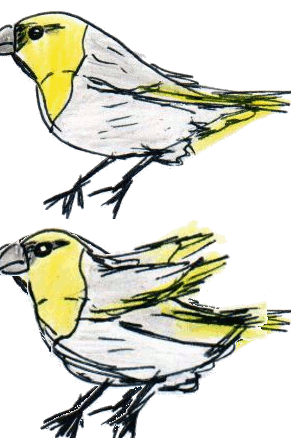
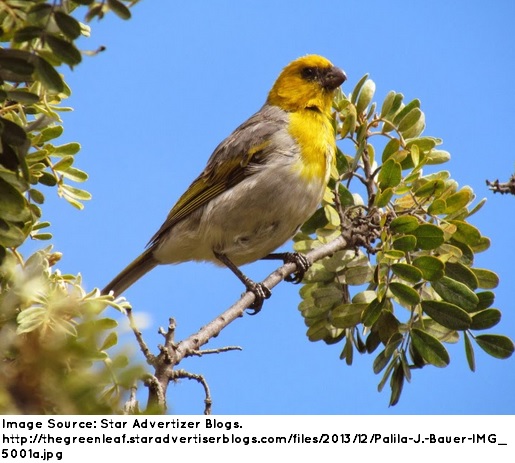
If you were to describe a Palila, you would definitely start with our golden yellow feathers and our short, rounded bills. We also have a two syllable call that sounds like a whistle and our backs are blue-grey. Our bills are black and the area near our eyes are black; it almost looks like a mask. We are very beautiful creatures and I don’t see what we could have done that would make us worthy of being critically endangered.
---------